Free Interactive Trainer

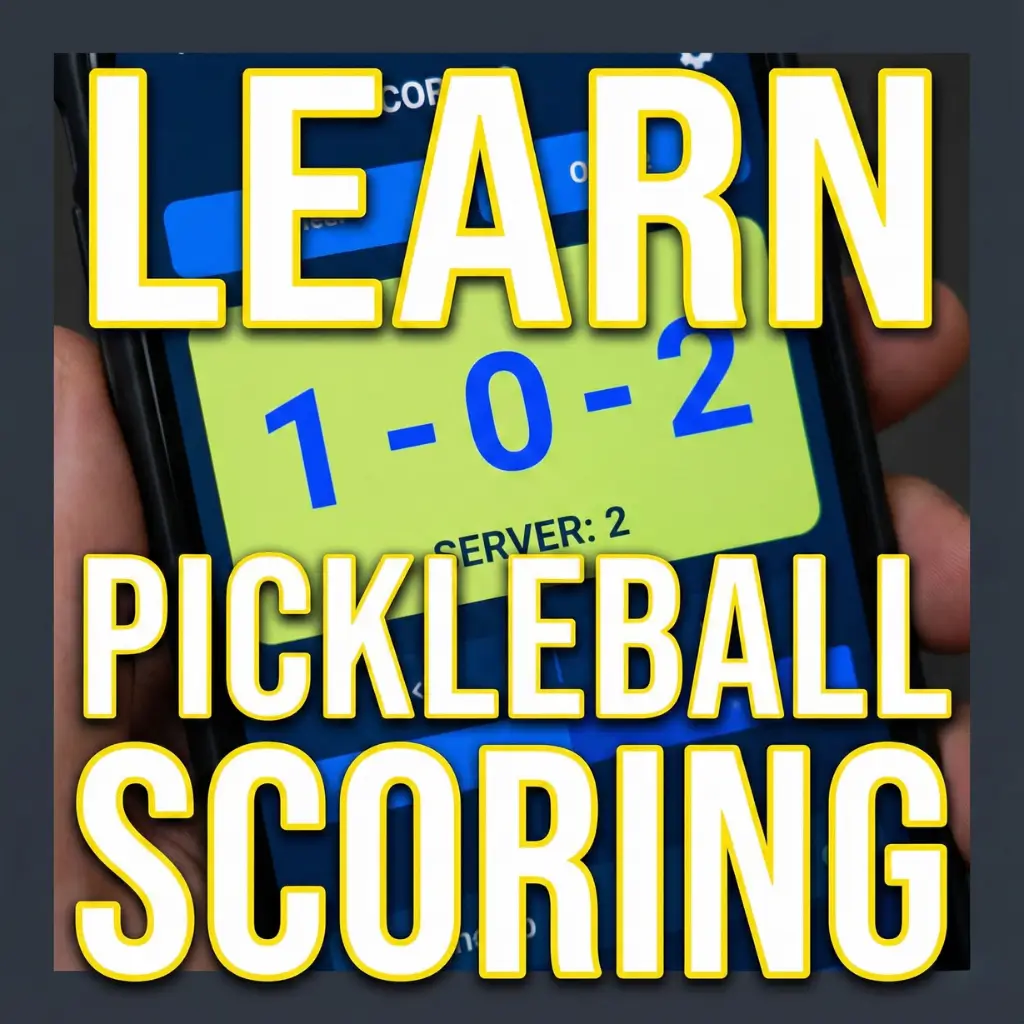
Pickleball Scoring Guide & Interactive Court Trainer

Control the game flow to see how players move, how scoring works, and when sideouts occur. Click the 'Serve Won' or 'Serve Lost' button to get started.

Interactive pickleball scoring tool showing player positions on the court

Current Call

0 - 0 - 2
Team B0
Team AServing0
Pickleball doubles court with the four players in their current serving positions A doubles court divided by a net, with the non-volley zone (the kitchen) either side of it. Four player markers move between the right (even) and left (odd) service courts as the score changes, and a SIDE OUT flash appears at the net when the serve passes to the other team. NET

Game Log

[1]Game start. Team A serves from the right court. The call is 0-0-2, so Team A gets one server before the first side-out.

How Pickleball Scoring Works

Pickleball scoring trips up almost every new player, but the rules are simple once you see them in motion. Standard play uses side-out scoring: only the serving team can win a point, games are played to 11, and you have to win by two. The interactive court above lets you click Serve Won and Serve Lost to watch the score call change, the server rotate, and side-outs happen in real time. The written guide below covers the same pickleball scoring rules step by step.

The three-number score call (doubles)

In doubles, the server calls three numbers before each serve: the serving team's score, the receiving team's score, and the server number — 1 or 2. So "5-3-2" means the serving team has 5, the receiving team has 3, and the second server is up. That third number is the part people forget, and it's the key to knowing when the serve passes to a partner and when it passes to the other team.

Serving team's score
Receiving team's score
Server number (1 or 2)
The call "5-3-2" — chip colors match the gold and red teams on the court above.

Side-out scoring: only the serving team scores

Because scoring in pickleball is tied to serving, you can only add to your score while your team holds the serve. Win the rally on your serve and you score a point, keep serving, and switch sides with your partner. Lose the rally and no one scores — instead the serve advances: first to your partner (the second server), and then, after both of you have lost a rally, to the opposing team. That hand-off to the other team is called a side-out.

Server rotation and the 0-0-2 start

Each team normally gets two servers per turn. The exception is the first service turn of the game: the team that serves first gets only one server, which is why every doubles game begins at 0-0-2 — the opening server is treated as the "second" server so the first side-out comes quickly and offsets the advantage of serving first.

Court positioning: even and odd

Where you serve from depends on your team's score. When your score is even (0, 2, 4…), you serve from the right court; when it's odd, you serve from the left. A handy memory aid — and the one the tool above illustrates — is that the player who starts on the right represents the team's even score for the whole game. Serves always travel diagonally, so the receiver waits in the diagonally opposite court.

Winning, singles, and rally scoring

A game is won by the first team to 11 with a two-point lead; at 10-10 you keep playing until someone leads by two. Singles scoring works the same way but with only two numbers (server score and receiver score) since there's just one server per side. Finally, you may hear about rally scoring — a system where a point is scored on every rally regardless of who served, used in leagues like Major League Pickleball and usually played to 15 or 21. The trainer on this page models traditional side-out scoring, the version used in most recreational and USA Pickleball tournament play.

Watch: Scoring Explained

If you would rather see the rules than read them, here is a clear video explanation of pickleball scoring rules. It is cued to the point where the scoring walkthrough begins, so it lines up with the guide above.

Video hosted on YouTube, starting at 5:18 — the scoring section.

Pickleball Scoring Quiz

Nine quick questions on everything above — the three-number call, server rotation, even and odd courts, side-outs, and how a game actually ends. You get the reasoning after every answer.

Question 1 of 9 0 correct
Answer key: all nine questions, answers, and explanations

1. In a doubles call like "9-4-2", what does the third number tell you?

Answer Whether the first or the second server of that team is serving.

The third number is the server number, 1 or 2. It tells everyone whether the serve still has to pass to a partner before a side-out.

2. Why does every doubles game start at 0-0-2?

Answer Because the first serving team gets only one server before the first side-out.

The opening server is treated as the second server, so the first side-out comes quickly. It offsets the advantage of serving first.

3. In traditional side-out scoring, who can win a point?

Answer Only the serving team.

Points come only on your own serve. Winning a rally while receiving earns you the serve, not a point.

4. Your team is serving and you win the rally. What happens next?

Answer You score a point, switch sides with your partner, and serve again.

The same player keeps serving after a point, but the partners swap the even and odd boxes. That swap is what keeps the score and the serving side linked.

5. Your team has 7 points. Which side do you serve from?

Answer The left, or odd, court.

Odd score, odd court: 7 is odd, so you serve from the left. Even scores (0, 2, 4 and so on) serve from the right.

6. You are the second server and your team loses the rally. What is that?

Answer A side-out — the serve goes to the opponents.

Both partners have now served and lost, so the serve changes hands. The new serving team starts with the player in the right/even court and calls server number 1.

7. The score reaches 10-10. How does the game end?

Answer Play continues until one team leads by two.

Games go to 11, win by two. At 10-10 you keep playing: 12-10, 13-11, and so on.

8. How many numbers are in a singles score call?

Answer Two — the server score and the receiver score.

There is only one server per side in singles, so there is no server number. The server still serves from the right when their score is even and the left when it is odd.

9. What makes rally scoring different?

Answer A point is awarded on every rally, no matter who served.

Rally scoring gives the point to whoever wins the rally. It is used in leagues such as Major League Pickleball, usually to 15 or 21, still win by two. Recreational and USA Pickleball tournament play uses side-out scoring.

Our Gear Pick

The Best Men's Pickleball Shorts We've Found

Lightweight, breathable, and built to move with you, these athletic shorts are our pick for long sessions on the pickleball court. An athletic fit and a comfortable 5-inch inseam make them an easy recommendation. Conveniently stash an extra pickleball in the back pocket, so as not to interfere with your swing.

Check the Price on Amazon

As an Amazon Associate, we earn from qualifying purchases.